
Hold a Fall Safety Stand Down Next Week to Protect Workers
OSHA’ s annual National Safety Stand-Down to Prevent Falls in Construction begins Monday, May 2. Use valuable resources from OSHA and NAHB to educate workers on fall risks and help avoid preventable injuries.
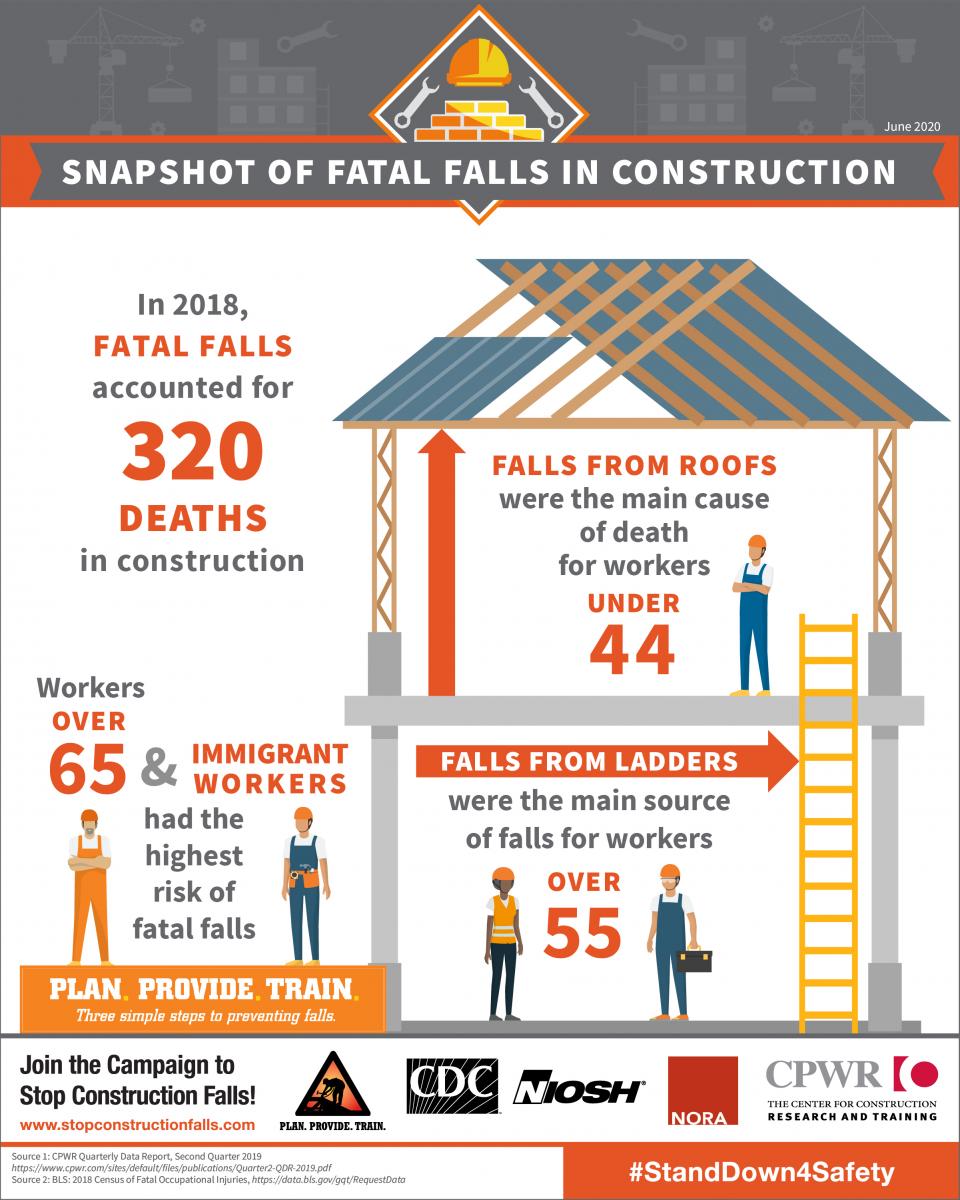
Fatalities caused by falls on jobsites continue to be the leading cause of death for construction employees, accounting for 351 of the 1,008 construction fatalities recorded in 2020, according to the Bureau of Labor Statistics. Those deaths were preventable with the proper training, jobsite requirements and equipment.
In addition, improper fall protection is the most frequently cited OSHA violation each year for construction.
OSHA, with support from NAHB, holds a week-long stand down to encourage construction firms to set aside time to discuss fall protection with workers. In advance of the stand down, company managers should review their policies, training materials and equipment to make sure workers have everything they need.
Pick a specific topic to focus on, one that is relevant to the current work on the jobsite like scaffolding, ladder or roofing safety. Present the information to the workers, keeping it short and simple. Use visual aids or conduct hands-on demonstrations, such as how to put on a harness or inspect a ladder/scaffold.
For tips on holding a stand down, visit the NAHB Fall Safety Stand Down page. NAHB also has a free comprehensive written toolkit for members that includes a model plan, training resources and handouts on a wide range of fall protection topics. Consider showing the video below to workers during the stand down (Spanish version available here).
Taking just 15 minutes on one day next week to focus on fall prevention can save lives, missed time and money. Falls on construction sites are preventable if everyone takes safety seriously.

Latest from NAHBNow
Awards
Feb 26, 2026
2026 National Housing Center Award Recipients AnnouncedThe National Housing Center Board of Governors has announced the recipients of the 2026 National Housing Center Awards. The induction and award ceremonies will take place during the 2026 Spring Leadership Meeting at the National Housing Center in Washington, D.C.
Advocacy | Codes and Standards
Feb 25, 2026
House Approves NAHB-Supported Energy Codes BillThe House today approved the Homeowner Energy Freedom Act, NAHB-supported legislation that would repeal burdensome provisions from the Inflation Reduction Act, including a provision that provides states $1 billion to incentivize the adoption of the 2021 International Energy Conservation Code (IECC).
Latest Economic News
Economics
Feb 25, 2026
Housing’s Share of GDP Declined Further at the End of 2025Housing’s share of the economy was 16.0% in the fourth quarter of 2025, according to the latest estimates of GDP produced by the Bureau of Economic Analysis. This share is down from 16.1% in the third quarter and is also lower than 16.3% as registered just one year ago.
Economics
Feb 24, 2026
Young Adult Headship Rates in 2024: Cyclical Slip or New Equilibrium?Reversing the post-pandemic rebound, the headship rates among young adults (the share of the population heading their own households) declined in 2024, according to NAHB’s analysis of the American Community Survey (ACS) data.
Economics
Feb 23, 2026
A 25-Basis-Point Decline in the Mortgage Rate Prices-In 1.42 Million HouseholdsHousing affordability remains a critical challenge nationwide, and mortgage rates continue to play a central role in shaping homebuying power. Although rates have declined from the recent peak of about 7.6% in 2023 to around 6.01% as of February 19,2026, they remain elevated relative to typical levels in the 2010s.