New Research Highlights the Real-World Energy and Resilience Benefits of Mass Timber Homes
Mass timber construction is gaining attention for its beauty, strength and sustainability. New research from the International Mass Timber Alliance (IMTA) in partnership with Oak Ridge National Laboratory (ORNL) examines a question many prospective homeowners ask: How does mass timber affect energy performance, indoor comfort and resilience?
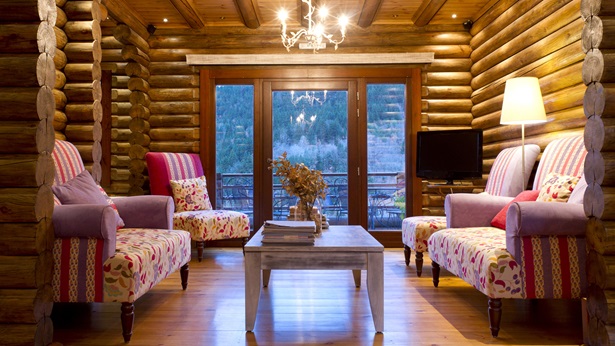
While the study focused on cross-laminated timber (CLT), many findings apply to log and timber homes because both rely on the thermal mass of solid wood. For consumers considering a log or timber frame home, the research helps illustrate how the thermal mass of solid wood may influence comfort, temperature stability and resilience in changing weather conditions.
Understanding the Research Project
The project, titled “Quantifying and Optimizing the Energy Benefits of Mass Timber Construction,” was undertaken by ORNL and IMTA to better understand how solid wood building systems perform compared to conventional lightweight wood-frame construction. The researchers evaluated three key factors:
- Overall energy use
- Peak heating and cooling demand
- Building resilience during power outages
The study was inspired in part by previous research in Finland that found measured energy use in mass timber buildings was as much as 50% lower than predicted by traditional energy models. Researchers wanted to determine whether similar performance characteristics could be observed in North American climates.
The project combined laboratory testing, field monitoring and computer simulations to examine mass timber thermal performance.
How the Testing Was Conducted
Laboratory Testing
Researchers first constructed small test cubes made from two different wall systems:
- Solid mass timber walls (CLT)
- Conventional lightweight framed walls with insulation
The cubes were tested inside ORNL's Large Scale Climate Simulator, a sophisticated facility capable of reproducing realistic summer and winter weather conditions. The simulator-controlled temperature and solar exposure, allowing researchers to measure how each wall system responded to changing conditions.
The test structures were equipped with sensors that measured:
- Air temperature
- Surface temperatures
- Relative humidity
- Comfort conditions
- Heating energy requirements
Researchers conducted multiple summer and winter experiments to compare temperature stability, energy consumption and occupant comfort.
Field Testing in Real-World Climates
The research team then built full-scale 10-by-10-foot test buildings in three different climate regions:
- Oak Ridge, Tenn.
- Golden, Colo.
- Nacogdoches, Tex.
At each site, one test structure used lightweight framing and the other used solid CLT construction. The buildings were equipped with identical heating and cooling systems and extensive monitoring equipment to track performance throughout the year.
Researchers monitored indoor temperatures, humidity levels, wall performance and electricity consumption to determine how each construction method performed under actual weather conditions.
What Did the Researchers Discover?
Solid Wood Walls Create More Stable Indoor Temperatures
Thermal stability emerged as a consistent pattern across the testing.
In both summer and winter laboratory tests, mass timber walls produced noticeably smaller indoor temperature swings than lightweight framed walls. The wood’s thermal mass absorbed and stored heat, moderating indoor conditions as outdoor temperatures changed.
Researchers found that CLT structures maintained more consistent temperatures throughout the day and experienced less temperature stratification inside the test buildings. Occupant comfort measurements also showed more stable comfort levels in the mass timber structures.
This suggests solid wood construction can create interiors that feel steadier and more comfortable, particularly during periods of rapid temperature change.
Thermal Mass Helps Shift Cooling Loads
The study showed that thermal mass affects both energy use and its timing.
During summer testing in Colorado, researchers observed that the CLT structure required less daytime cooling than the lightweight-frame building. Because the wood absorbed heat during the hottest parts of the day, cooling demand was delayed into the evening hours.
Computer simulations predicted peak cooling demand could be delayed by as much as four hours at the whole-building level and six to seven hours within the wall assembly itself. Although measured real-world performance showed somewhat smaller shifts, researchers confirmed that thermal mass can meaningfully reduce and delay peak cooling loads.
This ability to moderate daytime heat may improve comfort and reduce strain on HVAC systems during the hottest times of the day.
The Biggest Advantage May Be Resilience
The resilience testing produced some of the study’s most notable results, particularly during simulated power outages.
Researchers simulated an eight-day summer power outage in Golden, Colo., by turning off active cooling systems. During the hottest day of the test:
- The lightweight-frame building reached 94.5 degrees Fahrenheit.
- The mass timber building reached 87.9 degrees.
- The mass timber structure remained about 6.6 degrees cooler than the lightweight building.
Researchers concluded that wood’s thermal mass slowed indoor temperature rise and improved "passive survivability" during extreme conditions. Occupants could remain comfortable and safe longer when mechanical cooling systems are unavailable.
For those considering log and timber construction, the findings align with long-standing observations about the moderating effect of substantial wood structures.
An Important Nuance About Energy Use
One notable finding was that mass timber structures often used more heating and cooling energy than highly insulated lightweight-frame assemblies when both buildings maintained identical thermostat settings. In some field tests, CLT structures used roughly 35%to 60% more electricity.
However, the story is more nuanced than a simple comparison of utility bills.
Researchers found that actual energy consumption differences were substantially smaller than traditional insulation calculations predicted. Based strictly on wall R-values, the CLT buildings were expected to use about twice as much energy as lightweight-frame buildings. Instead, measured results were better because thermal mass offset some of the disadvantages of lower nominal insulation values.
The researchers concluded that traditional energy models do not fully capture how thermal mass influences real-world building performance.
What These Findings Mean for Log and Timber Home Buyers
Although this study focused on CLT construction, the findings underscore several characteristics that are highly relevant to log and timber homes.
The findings suggest that evaluating wood buildings solely by insulation values may overlook other performance characteristics. Solid wood construction provides thermal mass that can:
- Moderate indoor temperature swings.
- Improve perceived comfort.
- Shift heating and cooling loads.
- Enhance resilience during power outages.
- Help maintain habitable conditions during extreme weather events.
For buyers considering a log or timber home, these findings support the idea that a home's performance should be evaluated holistically. While insulation remains important, thermal mass, comfort, resilience and real-world performance also shape homeowner experience.
The ORNL research suggests that wood's ability to store and release heat is a valuable performance characteristic that traditional energy calculations often underestimate. As energy modeling tools evolve, researchers may gain a clearer picture of how thermal mass influences comfort, resilience and overall building performance.
Source: “Quantifying and Optimizing the Energy Benefits of Mass Timber Construction,” a research project conducted by Oak Ridge National Laboratory in partnership with the International Mass Timber Alliance.